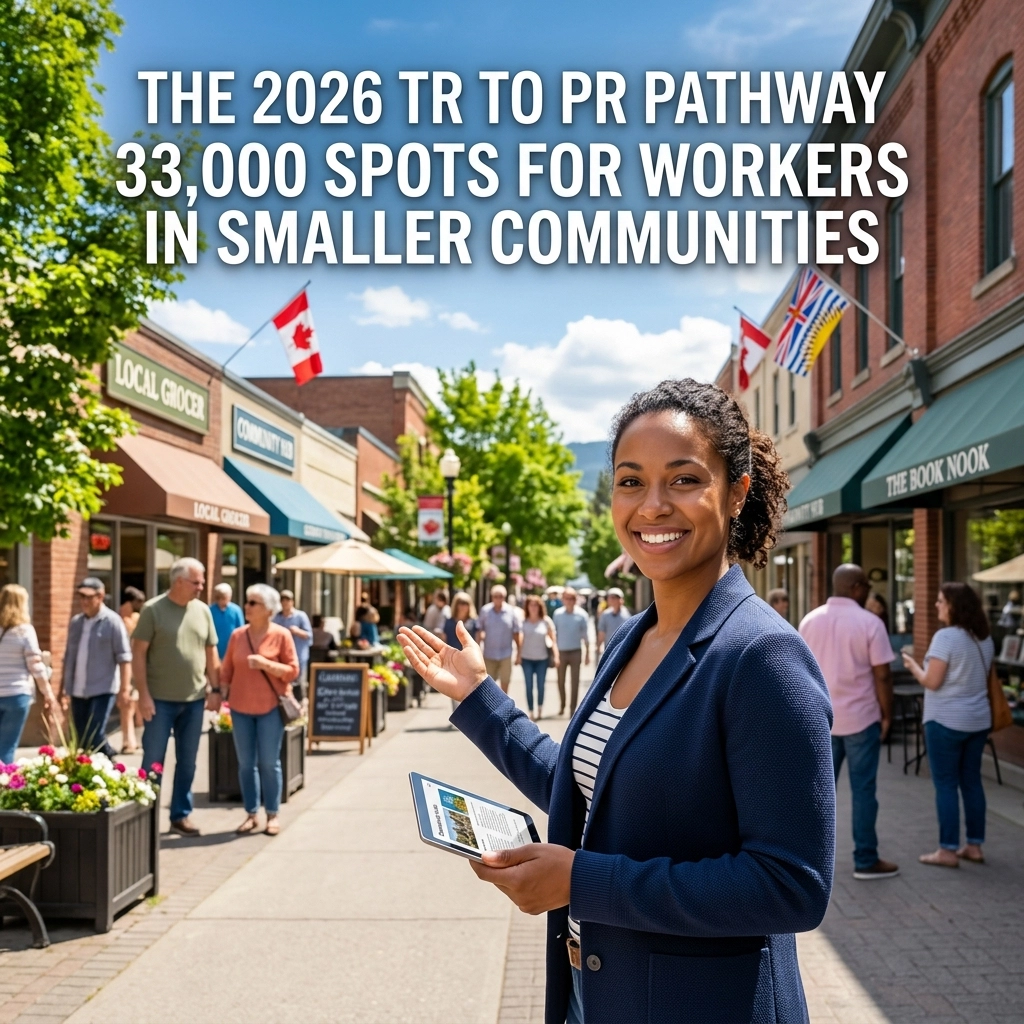
If you’ve been following the Canadian immigration scene lately, you know things have been… a lot. And when headlines start throwing around numbers like 33,000 spots, it’s easy to think Canada just launched another 2021-style TR to PR program.
That’s not what happened.
This announcement is not a brand-new public pathway for fresh applicants racing to upload documents into a new portal. It is better understood as an acceleration measure for people already in the permanent residence system: specifically, applicants in existing streams such as certain PNP, AIP, and rural pilot-related cases who have already been living in smaller communities for at least 2 years.
At Canada Vertex Immigration, we think this calls for a reality check, not hype. Yes, some people may benefit. But the main beneficiaries are already in the inventory, already waiting, and already tied to smaller communities. If you were hoping for a wide-open second version of the 2021 TR to PR pathway, this news will likely feel disappointing.
Let’s break down what the 33,000 fast-track spots actually mean, who may benefit, and who should be careful not to misread the announcement.
The Big Picture: 33,000 Spots, But Not 33,000 New Applications
First, let’s clear up the biggest misunderstanding. The 33,000 spots do not appear to represent a new intake for brand-new applicants. Instead, the measure is aimed at speeding up existing permanent residence applications already sitting in inventory.
That distinction matters. A lot.
In practical terms, this looks less like a new "apply now" opportunity and more like an effort by IRCC to move certain files forward faster: especially files connected to smaller communities and existing immigration channels such as Provincial Nominee Program (PNP) cases, the Atlantic Immigration Program (AIP), and rural pilot pathways.
Why now? It fits the government’s broader goal of managing temporary resident levels while keeping workers who are already established in communities that need them. For Ottawa, this is an inventory and settlement strategy. For applicants, it means the announcement is good news mainly for people already in the system.
For a deeper look at how this fits into the bigger picture, check out our breakdown of The Targets: Immigration Levels Plan 2026 Explained.

The Smaller-Community Requirement: Real, But Easy to Misread
The smaller-community angle is real. But again, this is where readers need to be careful.
The point is not that someone can simply move out of Toronto, Vancouver, or Montreal now and expect to qualify for a brand-new fast-track PR stream. The benefit appears tied to people who have already been living in smaller communities for at least 2 years and who are already connected to existing PR pathways.
So yes, geography matters. But not in the "pack your bags this month and jump into a new portal" sense.
The policy direction is clearly aimed at retaining workers who have already put down roots in places outside the biggest urban centres. Think of it as a reward for existing regional retention, not an invitation for last-minute relocation strategies.
Why the shift?
Smaller communities still face labour shortages, while major urban centres continue to deal with housing and infrastructure pressures. From a policy standpoint, IRCC is trying to support communities that need workers and have already been relying on temporary residents for years.
If you’re currently in a big city and feeling stuck, this announcement probably does not solve that problem directly. You may still need to explore other options through established programs, including PNP streams. You can start with our Ultimate Guide to Provincial Nominee Programs.
Who Actually Benefits?
Based on the announcement as currently understood, the people most likely to benefit are not new applicants, but those who are already well into the process. That may include individuals who:
- Already have a PR application in process through an existing stream.
- Are connected to programs like PNP, AIP, or rural pilots.
- Have been living in a smaller community for at least 2 years.
- Can already show a genuine settlement history in that community through work, housing, taxes, and day-to-day life.
That last point is important. This is not just about where you say you want to live. It is about where you have actually been living.
If you are outside the system right now, or if you were waiting for a brand-new public TR to PR launch, this announcement may not create an immediate option for you. Frustrating? Yes. But it is better to be disappointed by the truth than misled by a headline.

Priority for People Already in the Inventory
This is where the announcement becomes much clearer.
IRCC appears to be prioritizing people who are already waiting in the system, rather than opening the door to a fresh wave of applications. The likely beneficiaries include:
- Provincial Nominee Program (PNP) applicants who are already in federal processing.
- Atlantic Immigration Program (AIP) applicants.
- Applicants connected to rural immigration pilots and similar regional pathways.
In other words, if your file is already in motion, this could act like an express lane for processing. If your file does not exist yet, there may be no lane to enter at all under this specific measure.
That is the key reality check. The program is not broad in the way many people first assumed. It is targeted, inventory-based, and designed to move existing regional files faster.
Why This Feels Disappointing to So Many People
Let’s be honest: a lot of temporary residents saw the words TR to PR and immediately thought of 2021.
That reaction makes sense. The 2021 program was public, high-profile, and open to large numbers of new applicants. This 2026 measure, as described, is something very different. It is narrower. It is less open. And for many people, it is simply not an application opportunity at all.
That disappointment is real, especially for workers and graduates who are in Canada now but not yet inside one of the qualifying PR inventories. If that is you, the wrong move is to panic and chase rumours about secret portals, surprise caps, or last-minute document scrambles.
The better move is to assess where you actually stand:
- Are you already in a PR stream like PNP, AIP, or a rural pathway?
- Have you already been living in a smaller community for at least 2 years?
- Is your application already somewhere in the system?
If the answer is no, this announcement may be important policy news, but it is probably not your immediate pathway.
So, Is This Better Than Express Entry?
For the people who actually benefit here, maybe yes. Faster processing on an application that already exists is obviously valuable.
But for everyone else, it is not really a fair comparison. This is not a general alternative to Express Entry in the way a true public pathway would be. You cannot assume the 33,000 spots create a parallel option for workers with lower CRS scores who simply want a new route.
That is why careful advice matters here. If you are already in the inventory, this could be very good news. If you are not, you may still need to rely on Express Entry, a provincial nominee pathway, employer-driven options, or other established programs.
If you’re curious about how those routes compare, read our article on Express Entry vs. Provincial Nominee Programs.

Beware of Scams and Overpromises
Whenever immigration headlines get attention, the "ghost consultants" and self-declared insiders start warming up. This kind of announcement is perfect bait for bad advice.
Be careful.
If someone is selling you access to a "new TR to PR intake" without confirming whether you are already in a qualifying PR stream, that is a red flag. If someone tells you there is a guaranteed spot, that is another red flag. And if someone is pushing urgency without evidence, that is usually where your wallet gets hurt.
Using an unregulated consultant isn't just expensive: it can put your status and future applications at risk through bad filings or misrepresentation. Protect yourself by reading our guide on 5 Red Flags of Unregulated Consultants.
Final Thoughts: Read the Fine Print Before You Celebrate
The real message here is more cautious than the headline suggests.
This 2026 measure appears to reward people who are already in the system, already tied to smaller communities, and already waiting on permanent residence processing. For them, this may be genuinely helpful.
But if you were hoping for a fresh 2021-style TR to PR launch, this is not that. And pretending otherwise helps no one.
Our advice? Don’t build your immigration plan around viral summaries or optimistic rumours. Check whether you are actually in a qualifying stream. Check whether your file is already in process. And check whether your community history really fits what IRCC is targeting.
If you’re unsure where you stand, we can help you assess your current options and identify what pathway actually makes sense for your case. At Canada Vertex Immigration, we’d rather give you the honest answer than the exciting one.
Check out our News & Articles section for more updates, or browse our Sitemap to find the guide that matches your situation.
Were you expecting a brand-new TR to PR program when you first saw the 33,000 number? You’re probably not the only one.